
Glossary of Terms
Frequently Used Diamond & Jewelry Terminology
Understanding the terminology behind diamonds and fine jewelry helps you shop with confidence, whether you are evaluating cuts and settings or comparing stones. This glossary defines the diamond, gemstone and jewelry terms you are most likely to encounter, written in approachable language and organized alphabetically for easy reference.
A
Alloy: A mixture of metals, such as gold with copper or silver, used to make jewelry stronger.
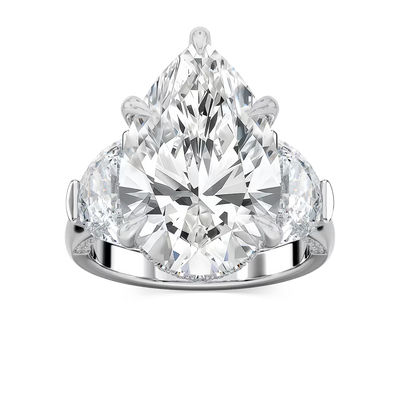
Anniversary ring: An embellished band given as an anniversary gift or three stone ring, representing your past, present and future.
Antique or vintage: Designs influenced by past style trends, often with beading, milgrain, art deco influences or engraving.
Asscher cut: A square step cut diamond with cropped corners and an Art Deco look.
B
Band: The part of a ring that circles the finger.
Bar set: A setting where thin bars of metal hold the stones, with a narrow bar between each one.
Bezel setting: A setting where a thin metal rim surrounds the edge of a stone.
Brilliance: The white light reflected from a diamond back to the eye.
C
Carat: The unit of weight used for diamonds and gemstones. One carat equals 0.2 grams.
Certificate: A report from a gemological laboratory describing a diamond or gemstone.
Clarity: A measure of a diamond's internal marks and surface blemishes.
Color: A measure of how colorless a diamond is, from D to Z.
Crown: The top portion of a diamond above the girdle.
Culet: The tiny facet at the bottom point of a diamond.
Cut: The proportions, symmetry and polish of a diamond.
E
Eternity band: A ring set with gemstones all the way around the band.
F
Facet: A flat polished surface on a diamond or gemstone.
Fire: The flashes of rainbow color seen in a diamond.
G
Girdle: The narrow edge around the widest part of a diamond.
Grown diamond: A real diamond created in a laboratory instead of mined.
H
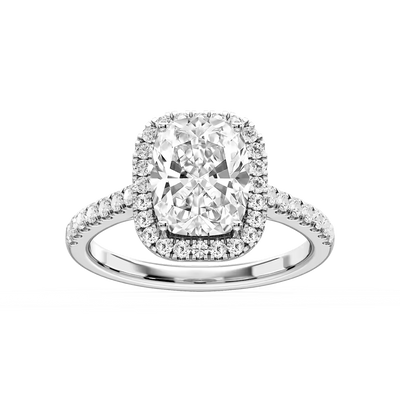
Halo setting: A center stone surrounded by a ring of smaller stones.
HPHT: High pressure high temperature, one method of growing diamonds in a laboratory.
I
Inclusion: A natural internal feature or mark inside a diamond.
K
Karat: A measure of gold purity. 24 karat is pure gold.
M
Mohs scale: A scale from 1 to 10 that measures a mineral's scratch resistance.
P
Pave setting: A setting with small stones set closely together to create a sparkling surface.
Pavilion: The bottom portion of a diamond below the girdle.
Platinum: A strong, naturally white precious metal used in fine jewelry.
Prong: A small metal claw that holds a stone in place.
R
Rhodium plating: A thin white coating applied to white gold for extra shine.
S
Scintillation: The sparkle and flashes of light seen when a diamond moves.
Setting: The way a stone is held in a piece of jewelry.
Shank: The part of the ring band below the setting.
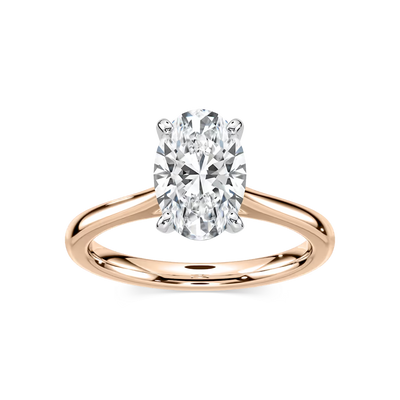
Solitaire: A ring with a single stone.
T
Table: The large flat facet on top of a diamond.
Tennis bracelet: A line of identical stones set in a flexible chain.